

5 Reasons to Switch to Safflower Oil This Year

Every few years, a "healthier" cooking oil enters the spotlight, and kitchens across the country start rethinking what's in their oil tin. Right now, that oil is safflower oil — and unlike some trends that fade after a season, this one is backed by genuine nutritional science, not just clever marketing.
If you've been sticking with the same cooking oil out of habit, this might be the year to reconsider. Safflower oil isn't just another bottle on the shelf; it offers real, measurable benefits for your heart, your cooking, and your everyday wellbeing. Here are five solid reasons to make the switch.
What happens to your cholesterol
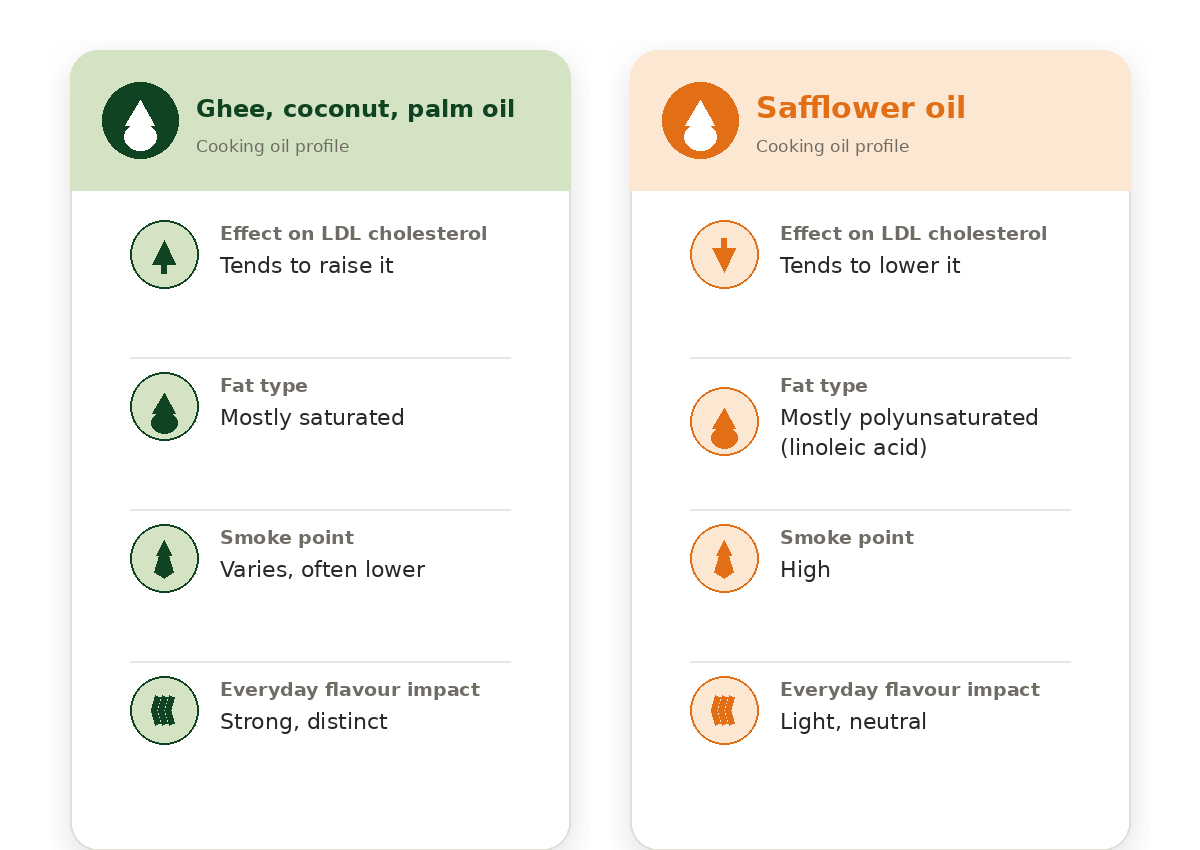
This is usually the first question people ask, and it's the right one. Safflower oil is naturally high in linoleic acid, a polyunsaturated fat that has a well-documented relationship with cholesterol: it helps lower LDL ("bad") cholesterol without disturbing HDL ("good") cholesterol.
Compare that to oils higher in saturated fat — ghee, butter, coconut oil, palm oil — which tend to push LDL cholesterol upward over time. The difference isn't dramatic after one meal, but it compounds. Oil is one of the few ingredients you use every single day, often multiple times a day, which means its fat profile has an outsized influence on your long-term heart health compared to almost anything else in your pantry.
- What happens to your cooking
Here's where a lot of "healthy oil" switches fall apart in real kitchens: the oil is good for you, but it can't handle a tadka, or it smokes the moment it hits a hot kadhai, or it leaves an aftertaste that changes your dal.
Safflower oil doesn't have that problem. It has a high smoke point, so it holds up under frying, tempering, and high-heat sautéing without breaking down into harmful compounds. And because its flavour is light and neutral, it doesn't compete with your spices the way mustard oil or coconut oil would. You can swap it into your existing recipes — your regular tadka, your Sunday puris, your everyday sabzi — without your family noticing anything except perhaps a lighter, less greasy finish.
This matters more than it sounds. An oil that requires you to change your cooking style is an oil most people quietly abandon within a month. Safflower oil doesn't ask that of you.
- Does it fit into a bigger dietary shift?
For a lot of households, switching oils isn't a standalone decision — it's one piece of a larger move toward simpler, less processed eating. That same instinct is what's bringing millets like jowar back into daily meals: naturally gluten-free, high in fibre, and slower to digest than refined wheat.
Sharanya Store leans into that same philosophy across its range — alongside Safflower Oil, it also stocks Jowar Flour and handmade Jowar Rotis, so switching your oil can be the first step in a broader shift rather than an isolated change.
Common questions before switching
Barely. Safflower oil's flavour is neutral enough that most people don't notice a difference in taste — only a lighter, less heavy finish.
Yes. Its high smoke point makes it suitable for frying, not just sautéing or dressing.
No. Many people start with one dish a week — a tempering, a stir-fry — before making it their primary oil.
It's typically priced closer to other premium cooking oils, but because a little goes a long way and it replaces the need for a second "healthy" oil, most households find it cost-neutral over time.
If you're ready to try it
Sharanya Store makes it simple to start small rather than commit all at once:
- 500ml : enough to test it in a handful of dishes before deciding
- 1 litre : a practical everyday size once you've made the switch
- 2 litre / 3 litre : better value for larger households or frequent cooking
The real question isn't "should I switch"
It's whether you're willing to make one small, repeatable change that quietly works in your favour every time you cook. Safflower oil doesn't ask you to change your recipes, your technique, or your budget dramatically — it just asks you to reach for a different bottle. For something you use every single day, that's a fairly low-effort trade for a genuinely heart-friendly upgrade.
Always consult your doctor or a nutritionist for advice specific to your health condition, especially if you have existing heart disease, high cholesterol, or are on cholesterol-related medication.


