
The History of Kalaburagi Rotti

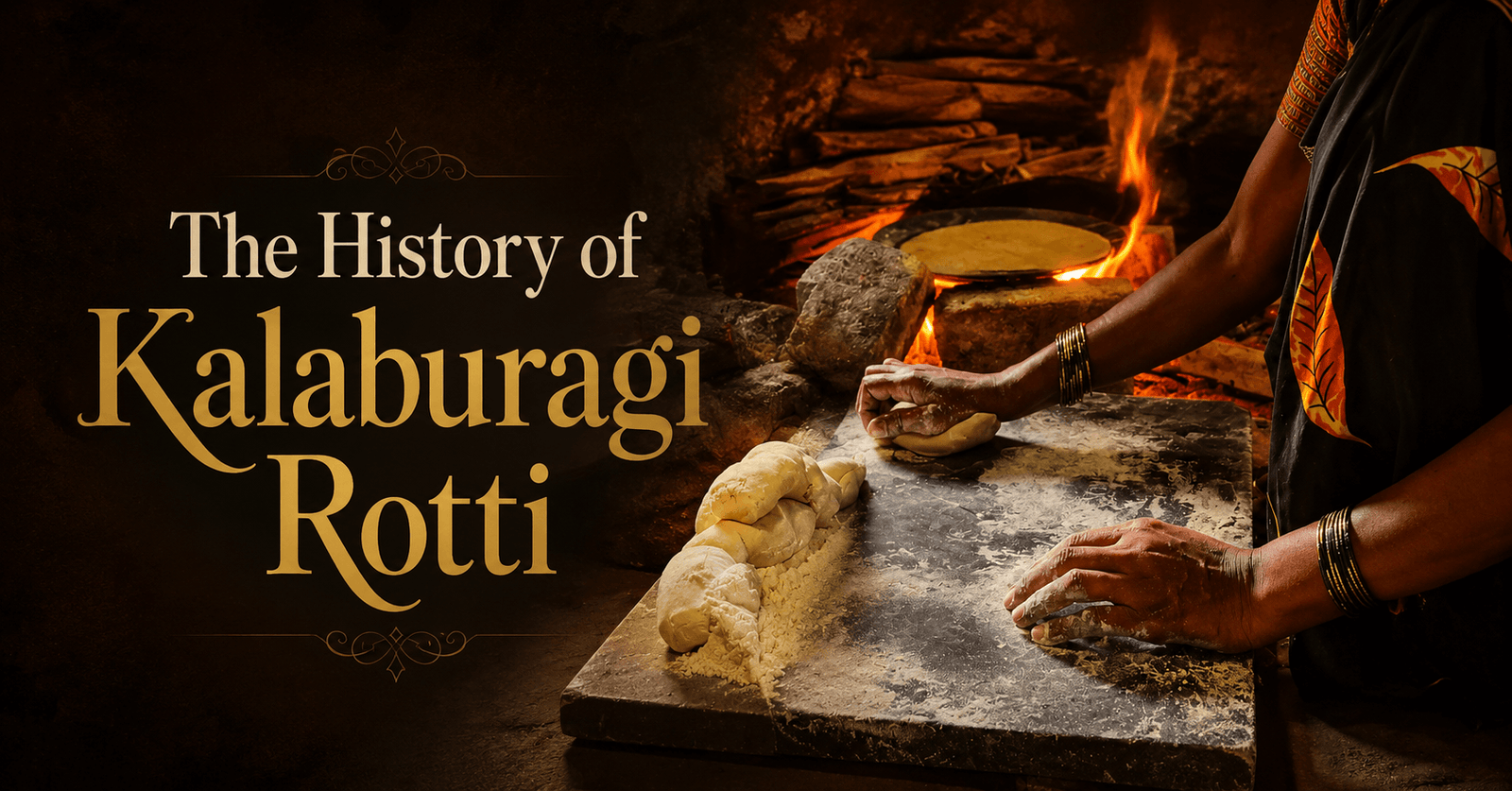
Long before "millets" became a buzzword on urban menus, the people of North Karnataka were already building their entire way of eating around one humble grain: jowar. And nowhere is that relationship more visible than in Kalaburagi, a city whose identity is quietly but deeply tied to a single flatbread — the Kalaburagi Rotti.
- Kalaburagi Rotti
Kalaburagi, formerly known as Gulbarga, sits in the Kalyana-Karnataka region of North Karnataka, an area historically shaped by Bahmani and Chalukya rule, dotted with forts, dargahs, and centuries-old monuments. But beyond its architecture and history, the region's everyday culture has always revolved around agriculture — and for generations, that meant jowar.
For decades, Kalaburagi was one of the most significant jowar-growing belts in the state, with rainfed farmland stretching across the district. Out of this agricultural tradition came Jolada Rotti — locally known as Jonne Rotte or simply jowar roti — an unleavened, coarse flatbread made purely from sorghum flour. Unlike a soft wheat chapati, Kalaburagi Rotti has its own character: it can be soft or slightly firm depending on how it's made, and it's traditionally hand-patted and cooked on an open flame or tawa, giving it a distinct texture and earthy aroma.
For generations, this rotti was simply home food — made fresh every morning, paired with brinjal curry, chutney podi, or spicy peanut chutney, and eaten without much thought about "branding" or nutrition trends. That began to change in recent years. As urbanisation pulled younger generations toward rice and wheat, jowar slowly disappeared from many city kitchens, and with it went a naturally iron-rich, fibre-heavy staple. Health surveys in the region flagged rising anaemia among schoolgirls, a change closely linked to the decline of traditional millet-based diets.
In response, local administration in Kalaburagi took a deliberate step to revive the tradition — formally branding the local jowar rotti as "Kalaburagi Rotti," organising women into self-help groups and cooperatives, and helping them produce rottis at scale using government-subsidised machines. What started as a nutrition and livelihood initiative has since grown into a recognised regional food identity, with Kalaburagi Rotti now reaching markets well beyond North Karnataka.
- Kalaburagi Rotti Online
One of the biggest shifts in Kalaburagi Rotti's story is how far it now travels. What was once available only in local homes and small-town eateries is increasingly being sold through online platforms, as cooperatives and small businesses have started packaging and shipping rottis to customers across India — and even exploring international markets.
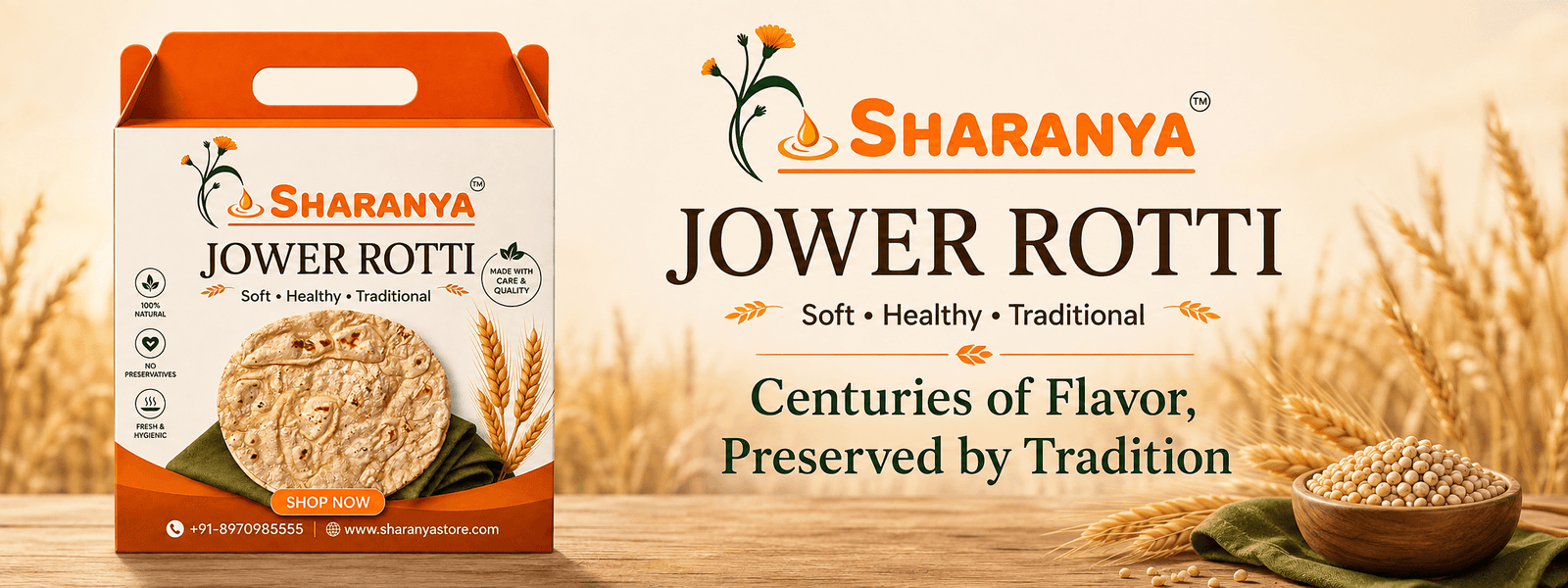
Ordering Kalaburagi Rotti online means you can enjoy an authentic North Karnataka staple without needing a local supplier or making the rottis yourself from scratch, which can be technically tricky given how differently jowar dough behaves compared to wheat. This is where Sharanya Store's handmade Jowar Rotis fit in — made using traditional methods, they bring that same North Karnataka character to your kitchen no matter where you're ordering from, ready to warm on a tawa in minutes.
Buying online also solves a freshness and consistency problem. Homemade jowar rottis are notoriously dependent on skill and practice — get the dough or the heat wrong, and the rotti turns out either too hard or too crumbly. Sourcing it from an experienced, trusted supplier removes that guesswork entirely.
- Kalaburagi Rotti Near Me
If you're based in or around Kalaburagi, finding authentic rotti locally is fairly straightforward — small eateries, home-based sellers, and local cooperatives across the district specialise in it, often selling fresh batches through the day. Many of the women's self-help groups behind the Kalaburagi Rotti revival supply directly to weddings, local functions, and small retail outlets in the region.
For those outside Kalaburagi, though, "near me" searches often come up short, since authentic jowar rotti-making is a fairly localised skill that hasn't spread evenly across India. This is exactly the gap that online ordering fills. Rather than searching for a local supplier who may or may not exist in your city, you can order Sharanya Store's Jowar Rotis directly and have that same North Karnataka staple delivered to your door — a practical alternative when "near me" simply isn't an option.
- Kalaburagi Rotti Recipe
Making Kalaburagi-style rotti at home is a skill passed down through generations, and while it looks simple, it takes practice to get the texture right. Here's the traditional approach:
Ingredients: Jowar (sorghum) flour, hot water, a pinch of salt.
Method:
- Boil water and gradually knead it into the jowar flour while it's still hot: this is essential, since jowar flour doesn't bind well with cold water the way wheat flour does.
- Knead the dough while it's warm enough to handle, working it into a smooth, pliable mass. Keep it covered with a damp cloth to prevent it from drying out and cracking.
- Take a small portion of dough and pat it out by hand on a flat surface dusted with dry jowar flour, gradually flattening it into a thin, even round — rolling pins are traditionally avoided in favour of hand-patting.
- Cook it on a hot tawa, flipping once it starts to firm up, then finish it directly over an open flame for a few seconds on each side to puff it slightly and add a smoky flavour.
- Serve hot with brinjal curry (yennegai), peanut chutney, or curd.
Getting the dough consistency right is the hardest part — too dry and it cracks while patting, too wet and it sticks and tears. This is precisely why many households, especially in cities, now prefer buying it pre-made. Sharanya Store's Jowar Rotis are prepared using this same traditional hand-patted method, so you get the authentic texture and flavour without the trial and error.
- Kalaburagi Rotti Price
Pricing for Kalaburagi Rotti varies depending on where you buy it and how it's sold. Locally in Kalaburagi, small-scale producers and self-help groups typically sell fresh rottis individually, priced modestly per piece since jowar flour and production costs are relatively low. When sold through cooperatives or larger packaged formats, pricing generally reflects the added cost of packaging, quality control, and shipping — especially for orders delivered outside the region.
Online, prices are usually listed per pack rather than per piece, making it easier to buy in bulk for a household or a family gathering. For the most accurate and current pricing, it's best to check directly on Sharanya Store's product page, where Jowar Rotis are listed alongside related staples like Jowar Flour and Safflower Cooking Oil — letting you build a complete, traditional North Karnataka meal in a single order.
Keeping the Tradition Alive
What makes Kalaburagi Rotti's story compelling isn't just its taste — it's how a food once at risk of disappearing from everyday kitchens has been deliberately revived, branded, and carried forward by the very communities who've made it for generations. Every rotti made today, whether patted by hand in a Kalaburagi kitchen or ordered online and delivered to your doorstep, carries a piece of that history forward.
If you'd like to experience it yourself, Sharanya Store offers handmade Jowar Rotis alongside Jowar Flour for those who prefer making their own, so you can enjoy this North Karnataka staple however suits your kitchen best.