

Kalaburagi Rotti Ingredients

Kalaburagi Rotti Ingredients: What Really Goes Into This North Karnataka Staple
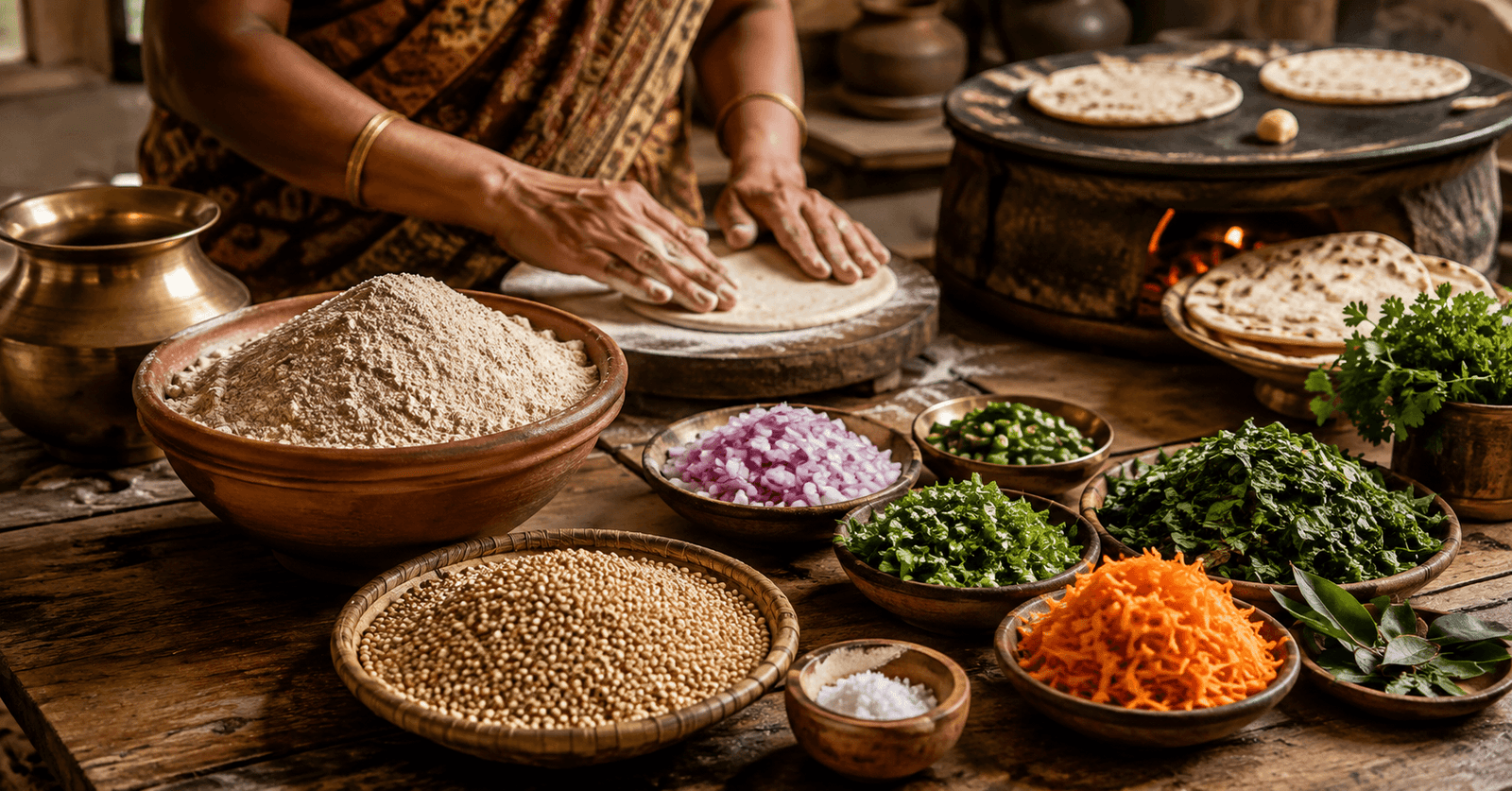
Ask someone from Kalaburagi what goes into their rotti, and you'll likely get a puzzled look before a simple answer: jowar flour, water, and a little salt. That's genuinely it. In a food landscape crowded with multigrain blends, preservatives, and long ingredient labels, Kalaburagi Rotti stands out precisely because of how little it contains — and how much flavour and nutrition it still manages to deliver.
Understanding the ingredients behind this North Karnataka staple explains a lot about why it has survived for generations, why it's naturally gluten-free and diabetic-friendly, and why getting the recipe right depends far more on technique than on the ingredient list itself.
- The Core Ingredient: Jowar Flour
Everything about Kalaburagi Rotti begins and ends with jowar — also known as sorghum, or jolada hittu in Kannada. Unlike wheat-based rotis, which rely on gluten to create elasticity, jowar flour has no gluten at all. This is exactly why the rotti has its distinctive coarse, slightly dense texture instead of the soft stretch of a chapati.
Jowar itself is a hardy, rain-fed crop that has been cultivated across North Karnataka for generations, thriving in the region's dry, semi-arid climate where water-intensive crops struggle. This isn't a coincidence — the rotti exists because the grain that grows best in the region became the grain the region built its diet around.
Nutritionally, jowar flour is rich in dietary fibre, iron, phosphorus, and B-vitamins, and it has a lower glycemic index than refined wheat flour, meaning it releases energy more slowly and steadily. This is one of the key reasons Kalaburagi Rotti has recently seen a resurgence — as more people move toward gluten-free, low-GI eating, a centuries-old regional staple turns out to already tick every modern nutritional checkbox.
Not all jowar flour is equal, though. Freshness matters enormously, since jowar flour can turn slightly bitter or lose its aroma if it sits too long after grinding. Sharanya Store's Jowar Flour is stone-ground and minimally processed, preserving the natural taste and nutrition that mass-produced, long-shelf-life flours often lose in the process.
- Water — And Why Temperature Matters
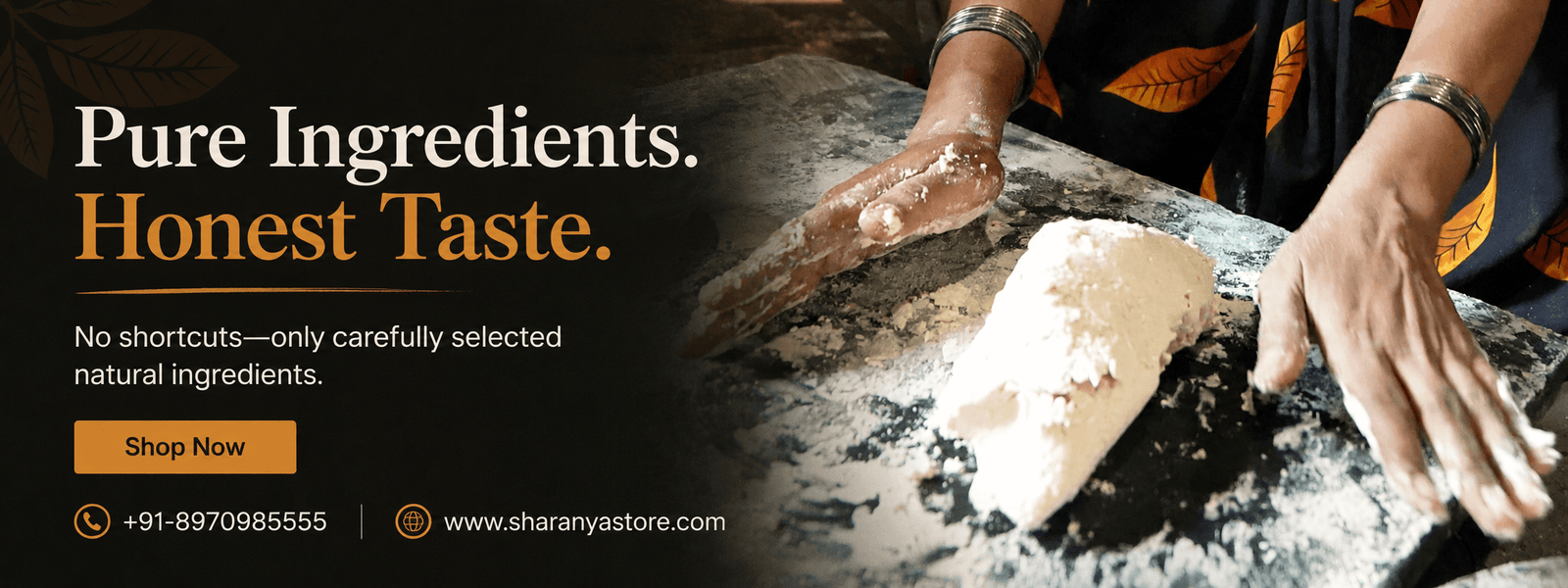
It seems almost too simple to call out, but water is arguably the most technique-sensitive ingredient in the entire recipe. Kalaburagi Rotti dough is traditionally made using hot or boiling water, not cold water. This is a crucial detail: because jowar flour has no gluten to bind it, hot water is needed to partially cook the starches in the flour, allowing the dough to hold together well enough to be shaped by hand.
Using cold water — a common mistake for first-time rotti makers — results in dough that crumbles and cracks the moment you try to pat it into shape. Getting the water temperature and the flour-to-water ratio right is, in many ways, the real "recipe" behind a good Kalaburagi Rotti — far more than any additional ingredient could be.
- Salt — Simple, Optional, and Traditional
A small pinch of salt is typically added to the dough, mostly for flavour rather than any functional role in binding the dough together. Some traditional households skip it entirely, especially when the rotti is meant to be paired with heavily spiced curries or chutneys that already carry enough seasoning on their own.
This is a good example of how restrained the ingredient list really is — even something as basic as salt is optional, underscoring how the rotti's flavour comes primarily from the jowar itself, along with the smoky char it picks up from being finished over an open flame.
- Dry Flour for Dusting — A Small but Essential Step
While shaping the rotti, a light dusting of dry jowar flour is used on the work surface and hands to prevent the dough from sticking. This isn't a separate "ingredient" in the traditional sense, but it plays an important functional role, especially since jowar dough is patted out by hand rather than rolled with a rolling pin — a technique that requires a drier surface to work cleanly.

What's Notably Absent
Just as important as what's in a Kalaburagi Rotti is what's deliberately left out. Traditional recipes contain:
- No oil or ghee kneaded into the dough : unlike some other regional flatbreads, the dough itself stays completely oil-free, which keeps the rotti naturally light.
- No wheat or maida blended in : authentic Kalaburagi Rotti is 100% jowar, which is what preserves its gluten-free status.
- No preservatives or additives : when made traditionally, it's meant to be consumed fresh, typically within the same day.
This "less is more" approach is precisely why the rotti has such a clean nutritional profile compared to many packaged flatbreads on the market today.
What It's Traditionally Served With
While these aren't part of the rotti dough itself, no discussion of Kalaburagi Rotti ingredients would be complete without mentioning its classic pairings, since the rotti is rarely eaten alone:
- Brinjal curry (yennegai) : a spiced, stuffed eggplant curry that's the most iconic pairing
- Peanut chutney or chutney podi : dry, spiced condiments that add texture and heat
- Curd: served alongside to balance the meal and aid digestion
- A light drizzle of oil or ghee : often added just before eating, more for flavour than necessity
If you're recreating this meal at home, using a light, neutral oil for the curry — rather than a heavy or strongly flavoured one — keeps the overall meal closer to its traditional, digestion-friendly character. Sharanya Store's Safflower Cooking Oil, naturally rich in unsaturated fats and neutral in taste, works well for tempering the brinjal curry or peanut chutney without overpowering the dish.
Why Fewer Ingredients Often Means Better Food
There's a broader lesson embedded in Kalaburagi Rotti's short ingredient list: traditional regional foods often achieve their nutritional value through simplicity, not fortification or additives. A three-ingredient rotti made from good-quality jowar flour delivers more genuine nutrition than many "enriched" packaged alternatives, simply because it hasn't been stripped of anything to begin with.
This is also why ingredient quality matters so much here. With so few components, there's nowhere for a mediocre jowar flour to hide — the flavour, texture, and nutrition of the final rotti depend almost entirely on how good the flour itself is.
Bringing It Into Your Kitchen
If you want to recreate authentic Kalaburagi Rotti at home, start with good-quality, fresh jowar flour and practice the hot-water kneading technique — it takes a few attempts to get the consistency right, but the ingredient list itself couldn't be simpler. Sharanya Store's Jowar Flour is a reliable starting point for this, ground using traditional methods to preserve its natural aroma and nutrition.
And if you'd rather skip the trial and error altogether, Sharanya Store's handmade Jowar Rotis offer the same three-ingredient authenticity — jowar flour, water, and salt — made using traditional hand-patting techniques, ready to warm and serve. Pair it with a curry tempered in Sharanya's Safflower Cooking Oil, and you have a complete, traditional North Karnataka meal built from ingredients you can count on one hand.


