

Does Switching Your Cooking Oil Really Help Your Heart?

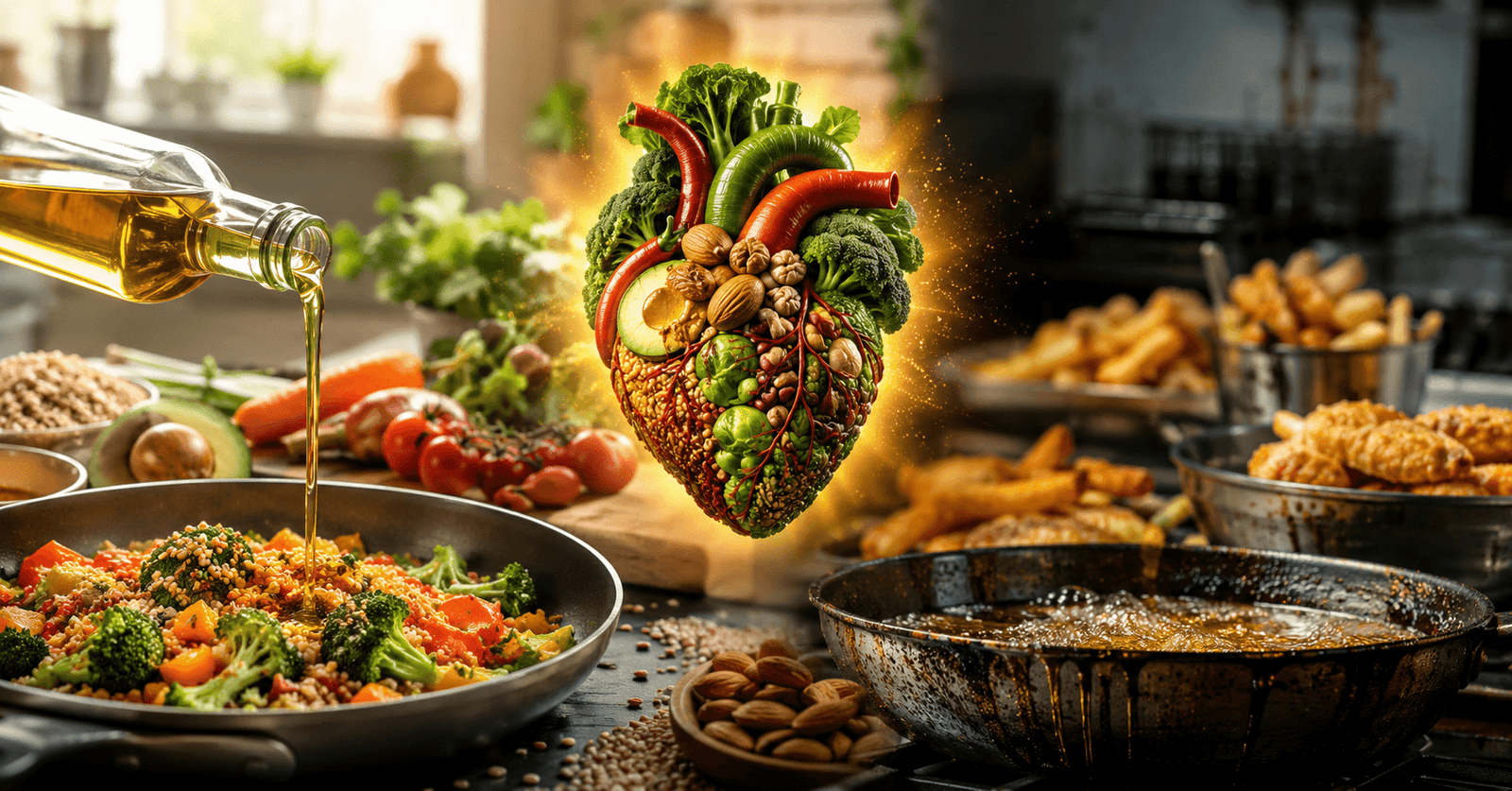
If you've walked down a grocery aisle lately, you've probably noticed the cooking oil shelf has gotten a lot more crowded — and a lot more confusing. Sunflower, groundnut, mustard, safflower, olive, rice bran, coconut... every bottle claims to be "heart-healthy," "cholesterol-free," or "doctor recommended." So the question a lot of home cooks in India are quietly asking is: does switching your cooking oil actually make a difference to your heart, or is it just clever marketing?
The short answer is yes — the type of oil you cook with genuinely matters for your cardiovascular health. But the full answer is a little more nuanced, and understanding why it matters will help you make a smarter choice for your kitchen, not just a trendier one.
Why Cooking Oil Affects Heart Health in the First Place
Every cooking oil is made up of a mix of fatty acids: saturated fat, monounsaturated fat, and polyunsaturated fat. The ratio of these fats is what determines whether an oil supports your heart or works against it.
- Saturated fats : (found in high amounts in ghee, butter, palm oil, and coconut oil) tend to raise LDL cholesterol — the "bad" cholesterol that contributes to plaque buildup in your arteries.
- Monounsaturated fats : (found in olive oil, groundnut oil, and mustard oil) are considered heart-friendly because they can help lower LDL cholesterol while maintaining HDL, the "good" cholesterol.
- Polyunsaturated fats : particularly linoleic acid (an omega-6 fatty acid), are known to actively reduce LDL cholesterol and support overall cardiovascular function. Oils like safflower oil and sunflower oil are especially rich in this fat.
Your heart doesn't just respond to how much oil you use — it responds to what that oil is made of. This is why simply switching from one bottle to another, if it changes your fat profile, can have a measurable effect over time.
The Science Behind the Switch
Multiple health bodies, including the World Health Organization and the Indian Council of Medical Research, have long recommended limiting saturated fat intake and replacing it with unsaturated fats to reduce cardiovascular risk. Studies consistently show that when people replace saturated fats with polyunsaturated fats in their diet, LDL cholesterol drops and heart disease risk decreases.
This is not just theoretical. It's the same principle behind why cardiologists often suggest cutting back on ghee-heavy cooking or deep frying in reused oil, and shifting toward oils that are naturally rich in unsaturated fats. The oil itself becomes a daily, cumulative input into your cardiovascular health — used in your morning poha, your evening sabzi, your weekend fry-ups.
That said, switching oils isn't a magic fix on its own. An oil rich in healthy fats used to deep-fry snacks every day won't outweigh a diet otherwise low in fibre, high in processed food, and low in physical activity. Cooking oil is one lever among several — but it's a lever you pull multiple times a day, every single day, which is exactly why small, consistent choices with your oil add up.
What Makes an Oil "Heart Healthy"
When evaluating a cooking oil for heart health, here's what actually matters:
- Low saturated fat, high unsaturated fat — this is the single biggest factor.
- High smoke point — oils that break down at high heat form harmful compounds; a stable oil is safer for Indian-style tempering, frying, and sautéing.
- Minimal processing and no added chemicals — heavily refined oils can lose natural antioxidants like Vitamin E during processing.
- Neutral taste — so it doesn't force you to compromise on the flavour of your food while eating healthier.
Safflower oil checks nearly every one of these boxes. It's naturally high in linoleic acid (a polyunsaturated fat directly linked to lower LDL cholesterol), has a light, neutral flavour that works well across Indian cooking styles, and carries a high smoke point that makes it suitable for both everyday sautéing and frying.
Making the Switch Practical, Not Painful
One reason people hesitate to switch oils is the assumption that "healthy" oils taste bland, cost more, or require you to relearn your cooking. In reality, the transition is far easier than most people expect — especially with oils that have a neutral taste profile like safflower oil, which blends seamlessly into dal, curries, rotis, and tempering without changing the character of your dish.
This is where Sharanya Store makes the switch simple. Their Sharanya Safflower Cooking Oil is extracted using traditional, time-honoured methods and sourced directly from trusted farmers, so what reaches your kitchen is naturally pure — without unnecessary chemical processing. It's rich in unsaturated fatty acids, particularly linoleic acid, which supports heart health and helps maintain balanced cholesterol levels, while its high smoke point makes it just as reliable for frying as it is for daily cooking.
If you're not ready to commit to switching your entire household's oil supply at once, Sharanya Store makes it easy to start small:
- Safflower Cooking Oil – 500ml : perfect for individuals, small families, or anyone who simply wants to try safflower oil before making a bigger switch.
- Safflower Cooking Oil – 1 litre : a practical size for regular daily cooking once you've decided this is the oil for your kitchen.
- Safflower Cooking Oil – 2 litre and 3 litre : designed for larger households or those who cook frequently and want better value with fewer reorders.
Beyond oil, Sharanya Store also offers traditional staples like jowar flour (atta) and handmade jowar rotis, which pair naturally with a heart-conscious diet — jowar is a whole grain that's naturally gluten-free, fibre-rich, and slower to digest than refined wheat, making it another small, sustainable swap for anyone building better everyday eating habits.
The Bottom Line
Switching your cooking oil really can help your heart — but it works best as part of a broader pattern of thoughtful eating, not a one-time fix. Choosing an oil that's naturally high in unsaturated fats, minimally processed, and stable at cooking temperatures gives your heart a genuine, daily advantage. It's a small decision you make once at the grocery shelf that quietly repeats itself in every meal that follows.
If you're looking to make that switch without overhauling your kitchen or your recipes, starting with a naturally processed oil like Sharanya's Safflower Cooking Oil is a low-effort, high-impact place to begin — and pairing it with wholesome staples like jowar flour rounds out a genuinely heart-friendlier way of cooking, one meal at a time.
Always consult your doctor or a nutritionist for advice specific to your health condition, especially if you have existing heart disease, high cholesterol, or are on cholesterol-related medication.


