

Why North Karnataka Eats Jolada Rotti Every Day

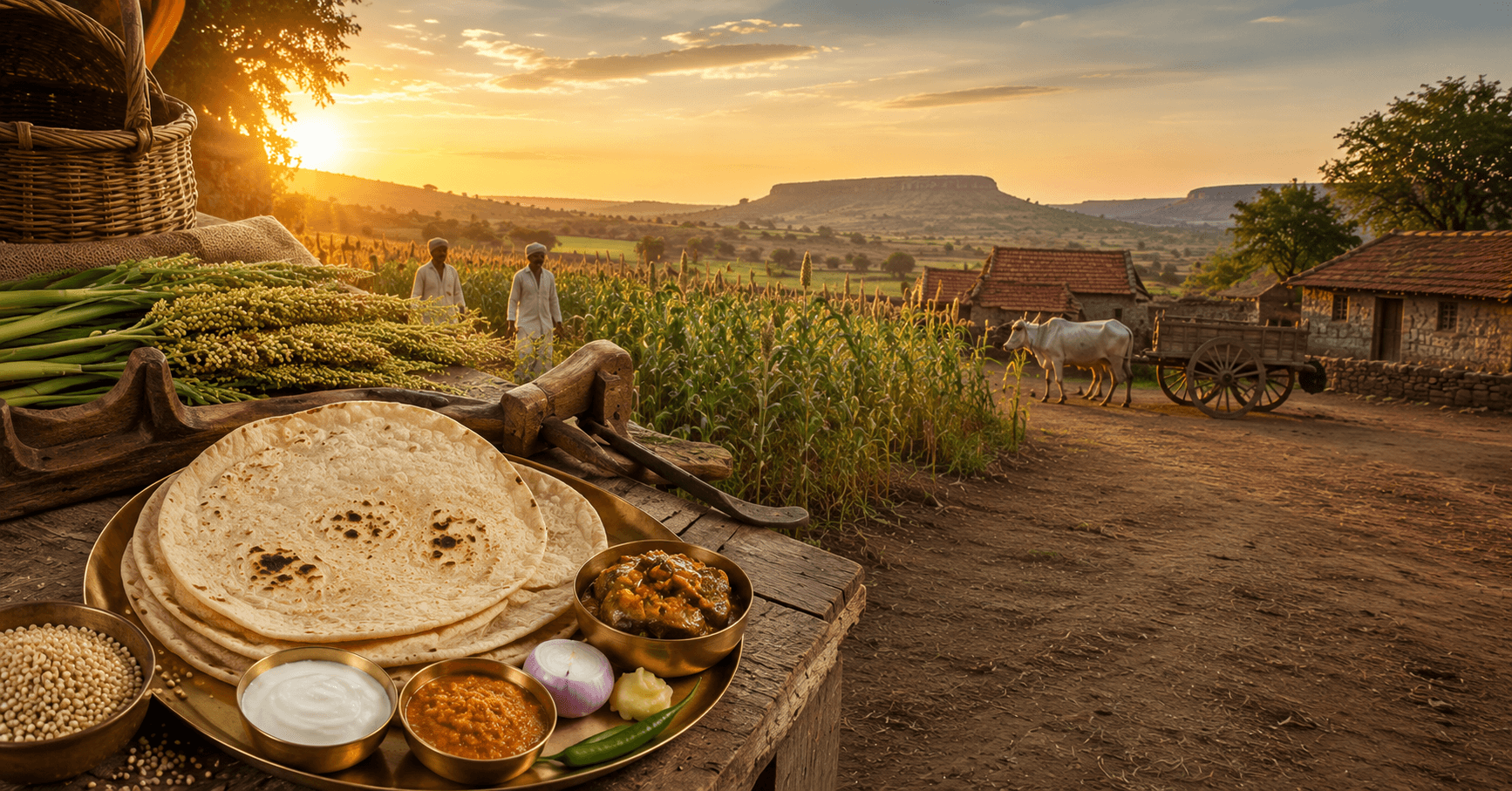
Why North Karnataka Eats Jolada Rotti Every Day: Geography, Climate and Culture
Walk into any home in Belagavi, Dharwad, Vijayapura, or Kalaburagi around mealtime, and you'll likely find the same scene: a stack of jolada rotti, patted thin by hand, cooking on a hot tawa, ready to be served with a fiery ennegai or a bowl of curd. This isn't a trend or a health-food revival — it's a daily habit that stretches back generations, and it exists precisely because of where this region sits on the map.
To understand why jolada rotti became North Karnataka's defining food, you have to look past the plate and into the soil, the sky, and the centuries of agrarian life that shaped this cuisine.
Quick Facts
- Region : North Karnataka — Belagavi, Dharwad, Vijayapura, Kalaburagi, Bagalkot
- Main grain : Jowar (sorghum), locally called "jola"
- Soil type : Black, red, and laterite soil
- Climate : Hot, semi-arid, low and unpredictable rainfall
- Historical roots : Traced to the Deccan region during the Vijayanagara Empire era
- Cultural core : Especially central to Lingayat households and rural farming communities
- It Starts With the Soil
North Karnataka's landscape is dominated by three soil types:
- Black soil (regur) – fertile but retains moisture unevenly, better suited to hardy crops
- Red soil – common across the Deccan plateau, less water-retentive
- Laterite soil – found in patches, generally low in fertility without heavy irrigation
None of these soils are particularly forgiving to thirsty crops like rice or wheat. What they support exceptionally well is jowar, alongside other regionally dominant crops such as:
- Maize
- Groundnuts
- Onions
- Chillies
Long before supply chains connected every corner of India, communities grew what their land could actually sustain. In North Karnataka, that meant jowar — season after season.
- A Climate That Rice and Wheat Struggle With
Sorghum is naturally drought-resistant, capable of producing reliable yields even through dry spells and inconsistent monsoons. In a region where farming has always meant working with a harsh climate rather than against it, jowar offered something rice and wheat simply couldn't: dependability.
- A History Rooted in the Deccan
The bond between North Karnataka and sorghum isn't a modern development. A few key historical threads:
- Sorghum-based staples in the Deccan region date back to the medieval period, roughly the 12th–16th centuries.
- Jola formed a core part of daily diets for farmers, laborers, and soldiers during the era of the Vijayanagara Empire (1336–1565 CE).
- The empire's agrarian economy was built around rainfed farmland, making millet-based meals far more practical than irrigation-dependent rice.
- Rice, by contrast, was more closely associated with irrigated land and urban elites of the time.
That distinction has echoed forward for centuries. Even today, jowar remains the everyday grain of rural and working communities across North Karnataka, while rice tends to hold a more occasional place on the table.
- Built Around a Working Life
Jolada rotti isn't just practical because the crop grows well locally — it's also shaped by the lifestyle it supports. Traditional preparation reflects this:
- The dough is patted out by hand rather than rolled with a pin.
- It's cooked on a tawa or directly over open flame.
- It's made with little to no oil, keeping it simple and functional.
- It's often prepared in large batches, suited to feeding a full household after long field hours.
For agricultural communities working long days, this meant a food that was filling, energy-sustaining, and quick to prepare at scale — not a delicacy, but a dependable daily meal.
Common pairings you'll find on a North Karnataka thali:
- Badanekai ennegai (stuffed brinjal curry)
- Menthya palya (fenugreek stir-fry)
- Shenga chutney (peanut chutney)
- Curd or buttermilk
It's especially central to Lingayat households and rural communities across districts like Belagavi and Dharwad, where these hearty, spice-forward dishes are served daily.
- A Cuisine Shaped by Geography, Not Trend
It's worth contrasting this with southern Karnataka, where rice dominates the plate instead.
- South Karnataka → wetter climate, better irrigation → rice as the staple
- North Karnataka → drier climate, harder terrain → jowar as the staple
This north-south divide within a single state is a direct reflection of geography. Karnataka's cuisine, in other words, isn't one single culinary identity — it's a map of its climate, drawn out in food.
- Why the Tradition Still Holds Today
Even as urban diets shift toward polished rice and refined wheat, jolada rotti hasn't lost its place in North Karnataka. A few reasons why:
- Cultural memory – it's the food of home, family kitchens, and festivals.
- Practicality – it remains affordable, filling, and easy to prepare in bulk.
- Health relevance – sorghum is naturally gluten-free, fiber-rich, and mineral-dense.
- National millet revival – as millets gain renewed attention across India, jolada rotti finds itself in an unusual position: an ancient staple that's also a modern health trend.
For families outside North Karnataka wanting to bring this tradition into their own kitchens, quality flour makes all the difference. Sharanya Store's Jowar Atta is stone-ground from handpicked sorghum grains, preserving the same wholesome character that has defined jolada rotti in North Karnataka for generations — so you can recreate that authentic taste and texture at home, wherever you are.
More Than a Meal
Jolada rotti tells a bigger story than what's on the plate. It's the story of a region that built its food culture around what its land, sky, and history handed it — and made something enduring and deeply loved out of it. Every rotti patted thin and cooked over an open flame carries that story forward, one meal at a time.
Ready to bring that tradition home? Explore Sharanya Store's range of authentic, stone-ground jowar products — sourced with the same respect for quality and heritage that has kept jolada rotti on North Karnataka's tables for centuries.


