

Why Jowar Rotti Is the Best Choice for Diabetics

Why Jowar Rotti Is the Best Choice for Diabetics
Managing diabetes often feels like a constant negotiation with your plate — especially in India, where grains form the base of nearly every meal. Rice and refined wheat, the two most common staples, can send blood sugar climbing quickly, leaving many people unsure what to eat. The good news is that one of the healthiest options for blood sugar control is also one of the most traditional: jowar rotti. Made from humble sorghum flour, this North Karnataka staple ticks nearly every box that matters for people watching their glucose. Here is why the everyday jowar rotti deserves a permanent place on a diabetic-friendly table.
- Understanding the Glycemic Index
The glycemic index (GI) measures how quickly a food raises blood sugar after you eat it. High-GI foods cause sharp, sudden spikes, while low-GI foods release their energy slowly and steadily. For anyone with diabetes, favouring low-GI staples is one of the single most effective dietary strategies available. Jowar has a notably lower glycemic index than refined wheat or white rice, which means it helps keep blood sugar on an even keel rather than sending it soaring after a meal. Fewer spikes means fewer crashes, and far better day-to-day control.

- Rich in Fibre That Slows Sugar Absorption
Jowar is naturally high in dietary fibre, and fibre is a diabetic's quiet ally. It slows digestion and the absorption of sugars into the bloodstream, blunting the rapid rises that are so risky when glucose control is fragile. A fibre-rich meal also keeps you feeling full for longer, which reduces the unhealthy snacking that can quietly sabotage a careful eating plan. When you make rotti from good-quality jowar atta, you keep all of that valuable natural fibre intact rather than stripping it away as refining does.
- Naturally Gluten-Free
Sorghum contains no gluten, which makes jowar rotti a safe and comfortable choice for people who are gluten-sensitive or who simply want to reduce gluten in their diet. Many people managing diabetes are also mindful of digestion and gut health, so a grain that is gentle on the stomach while remaining steady on blood sugar is a genuinely rare and welcome combination. It is a staple you can eat daily without the heaviness that wheat-rich meals sometimes bring.
- Packed With Slow-Release Energy
The complex carbohydrates in jowar break down gradually, providing sustained energy without the crash that follows sugary or highly refined foods. For diabetics, this steady supply is invaluable: it supports concentration, mood, and stamina through the day while avoiding the glucose roller-coaster that leaves you tired an hour after eating. Stable energy also makes it easier to stay active, and regular activity is itself a cornerstone of good blood sugar management.

- A Nutrient-Dense Staple
Beyond its effect on blood sugar, jowar delivers meaningful amounts of protein, iron, magnesium, and B-vitamins. These nutrients support overall metabolic health, which becomes especially important when you are managing a lifelong condition. Swapping even one or two servings of rice or wheat a day for jowar rotti quietly upgrades the nutrition of the entire meal, giving your body more of what it needs while asking less of your pancreas. It is a small change with a broad payoff.
- The Perfect Diabetic-Friendly Plate
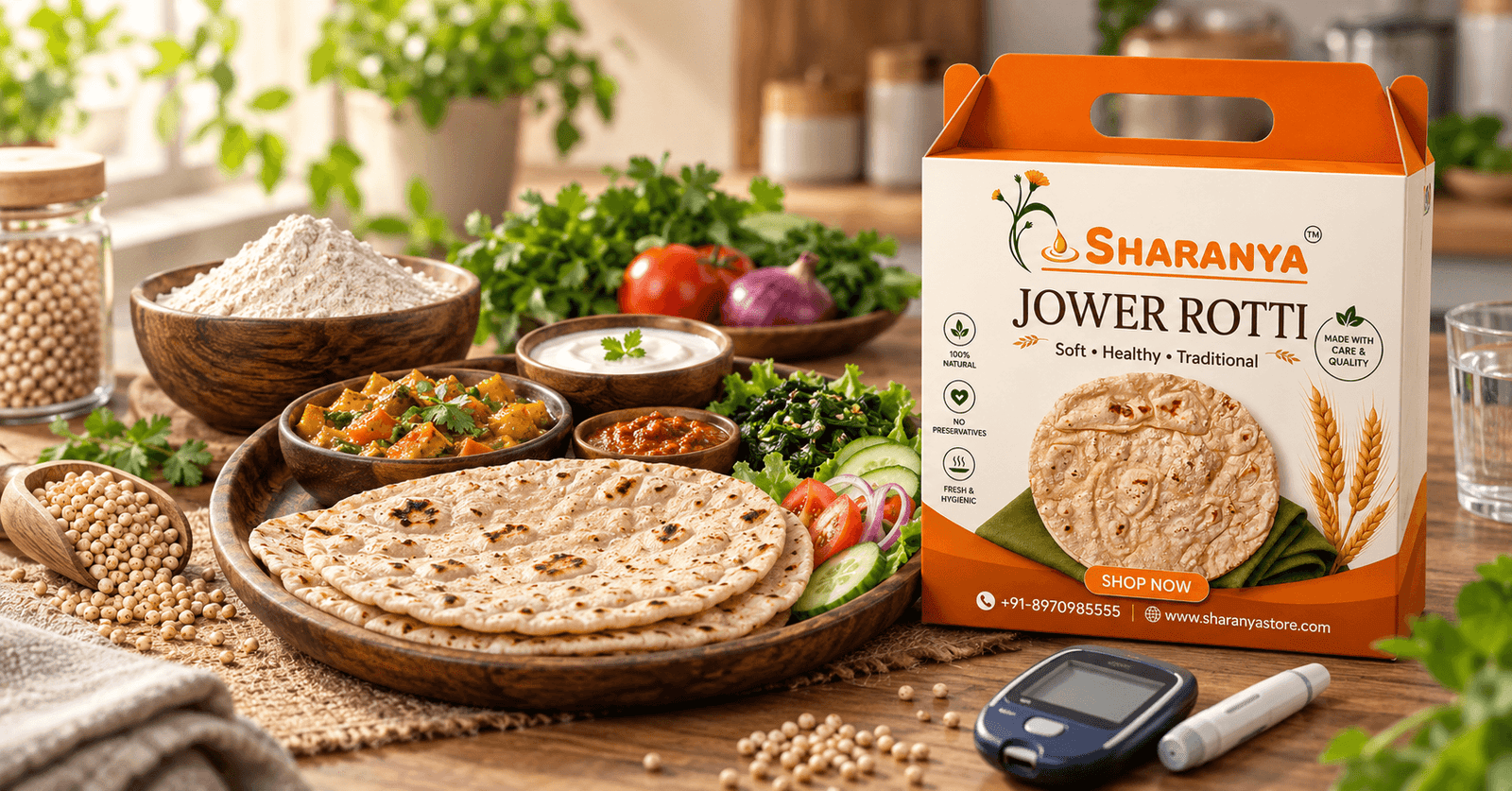
Jowar rotti pairs beautifully with fibre-rich vegetables, dals, and lightly spiced curries. To build a well-balanced plate, fill half of it with vegetables, add a good source of protein such as dal, paneer, or curd, and include a small amount of healthy fat like pure safflower oil, which supports heart health — a common concern for people living with diabetes. Keep portions moderate rather than piling on rotti after rotti, and you have a meal that is as satisfying as it is genuinely smart for your glucose.
- Convenience Without Compromise
One reason people drift toward refined, high-GI foods is sheer convenience. Making fresh rotti every day takes time, effort, and a practised hand. That is exactly why ready-made options matter so much for busy households: our fresh, handmade jowar rotti box lets you enjoy authentic, diabetic-friendly rotti without the daily labour — soft, wholesome, and ready to warm and serve in minutes. Healthy eating is far easier to sustain when the healthy choice is also the easy one.
- A Word of Balance
Jowar rotti is an excellent choice, but it is important to be honest: no single food manages diabetes on its own. Portion control, regular physical activity, adequate sleep, and your doctor's guidance all matter just as much as what grain you choose. Think of jowar as a powerful ally within a wider healthy-eating plan rather than a cure in itself. If you are curious about how the very same grain supports weight goals, read our companion piece on whether jowar atta is good for weight loss.
- Simple Daily Swaps to Get Started
Adopting jowar does not have to happen overnight. Start by replacing just one meal a day — perhaps lunch — with jowar rotti in place of rice or wheat chapati, and notice how much steadier your energy feels through the afternoon. Keep a batch of soft rotti ready so the healthy choice is always the convenient one, and build a habit of pairing it with a large serving of vegetables and a protein like dal or curd. Small, repeatable swaps like these are far more effective than a dramatic overhaul you cannot maintain. Over a few weeks, jowar simply becomes part of how your household eats — no willpower required, just a better default sitting quietly on the shelf as fresh jowar atta or ready-made rotti.
Make the Switch Today
Few changes are as easy — or as rooted in tradition — as swapping refined grains for jowar rotti. It is a food our ancestors thrived on for centuries, and it happens to be one of the smartest choices modern nutrition can offer someone living with diabetes. Explore our full jowar range and give your daily meals a wholesome, blood-sugar-friendly foundation that your future self will be grateful for.